 Save
Save There's something almost magical about how roasting transforms vegetables—that moment when you pull a baking sheet from the oven and the kitchen fills with caramelized sweetness that somehow smells nothing like raw vegetables anymore. I discovered this soup on a gray afternoon when I had an abundance of produce but zero inspiration, and what emerged was something so velvety and rich that my skeptical partner asked if I'd added cream. I hadn't, which felt like winning a small kitchen victory.
I made this soup during the first autumn chill when my daughter came home from school wanting something warm, and watching her declare it better than the canned stuff she'd tried at a friend's house was a quiet moment of parenthood I still think about. The kitchen was steamy, the house smelled incredible, and for once everything felt right.
Ingredients
- Carrots and sweet potato: These are your sweetness anchors, and cutting them into roughly equal sizes ensures they roast at the same pace instead of some pieces turning to mush.
- Red bell pepper and zucchini: They add brightness and body without overwhelming the flavor, though zucchini releases water so don't be alarmed if the soup thins slightly.
- Red onion: Quartering rather than finely chopping lets it caramelize beautifully and adds a gentle sweetness that mellows during roasting.
- Garlic: Leave whole cloves unpeeled for roasting, they become impossibly creamy and sweet, nothing like raw garlic.
- Olive oil: Use decent quality here since there's nowhere for it to hide, and it's the only fat carrying flavor.
- Vegetable broth: The foundation of everything, so taste your broth first because some are saltier than others and you'll adjust at the end.
- Thyme and rosemary: Dried herbs work wonderfully in this because the roasting and long simmer mellow them out, preventing any harsh bitter notes.
- Smoked paprika: Just a whisper of this adds complexity and a subtle depth that makes people ask what your secret ingredient is.
Tired of Takeout? 🥡
Get 10 meals you can make faster than delivery arrives. Seriously.
One email. No spam. Unsubscribe anytime.
Instructions
- Fire up the oven and prep the vegetables:
- Preheat to 425°F and line your baking sheet with parchment—this matters because it prevents sticking and makes cleanup actually bearable. Chop everything into similar-sized pieces so they roast evenly.
- Season and roast:
- Toss the vegetables with olive oil, salt, pepper, and all your herbs right on the sheet, then spread them in a single layer with some breathing room. After 15 minutes, give them a gentle toss so the other sides kiss the hot pan and develop that caramelized color.
- Combine with broth and simmer:
- Once the vegetables are golden and tender, transfer them to a pot, add your broth, and let it all get to know each other over medium heat. Those 10 minutes of simmering let the flavors settle into something cohesive.
- Blend until silky:
- An immersion blender is easiest and least risky, but if you're using a countertop blender, let the soup cool slightly first and work in batches. Blend until it's completely smooth—no little vegetable flecks should remain.
- Taste and adjust:
- This is non-negotiable: taste before serving, because broth saltiness varies wildly and you may need more pepper or a pinch of salt to make it sing.
- Serve with joy:
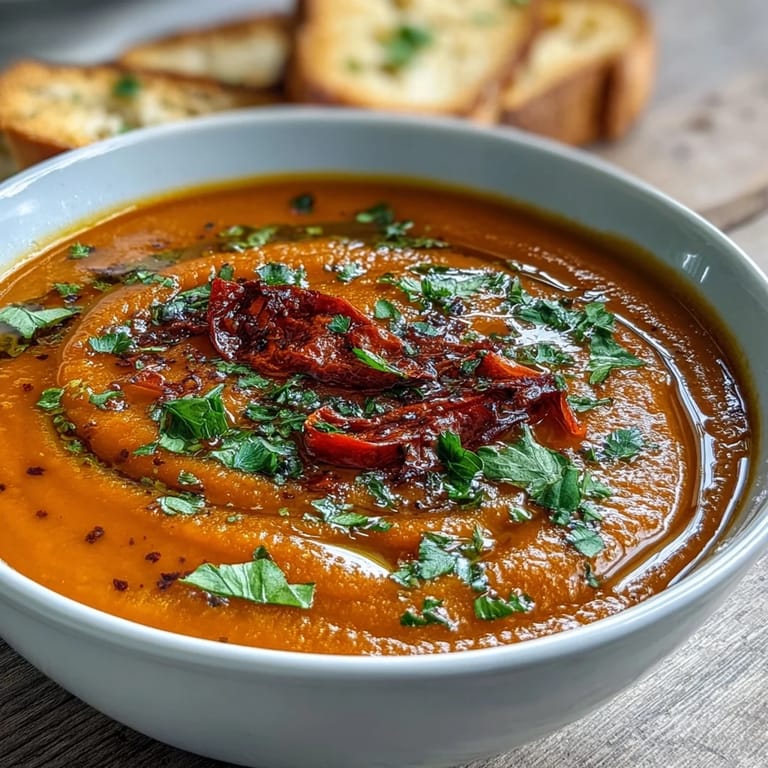
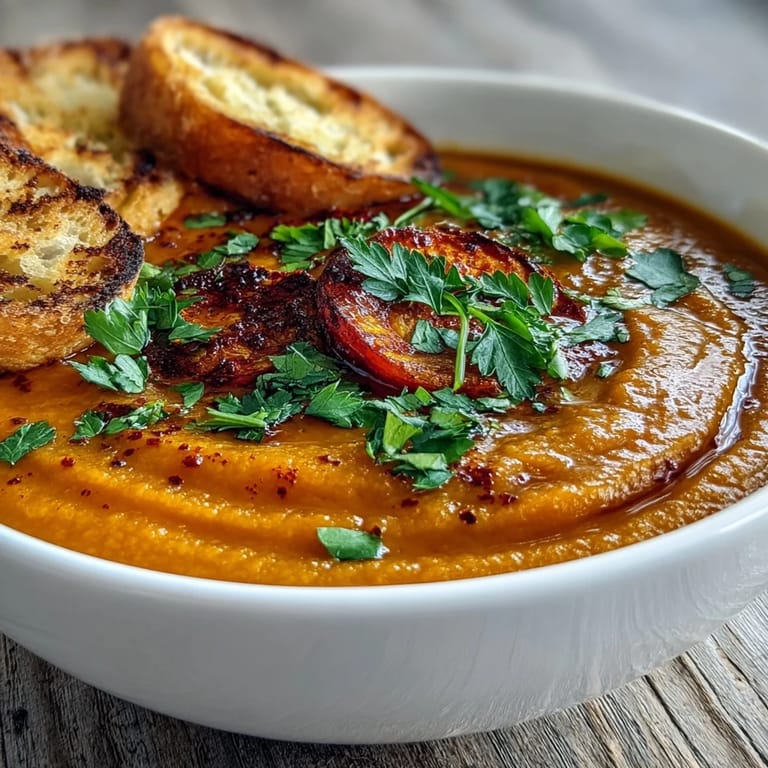
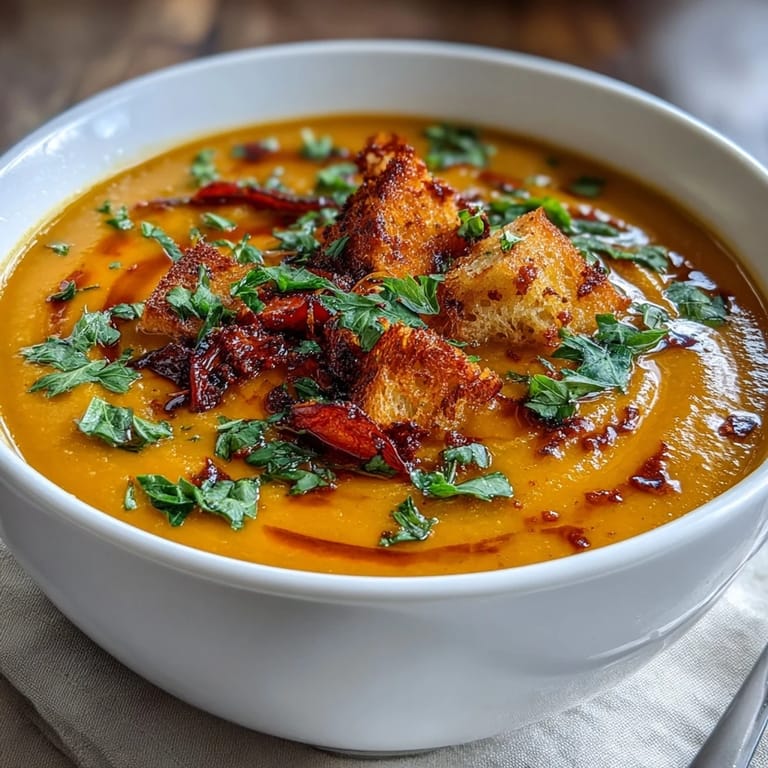
- A little fresh parsley, a drizzle of excellent olive oil, and perhaps some croutons transform it from weeknight dinner into something that feels special.
 Save
Save The moment I realized I loved this recipe was when my mother-in-law, who barely ate vegetables, asked for seconds and then asked for the recipe. She was suspicious of anything green and orange, but something about the roasted sweetness and creamy texture broke through her usual resistance, and suddenly we were talking about how she might make it herself.
When Roasting Becomes the Star
The roasting step is where this soup separates itself from every other vegetable soup you've ever had. When vegetables roast at high heat, their natural sugars caramelize, creating a depth that you simply cannot achieve by boiling or sautéing alone. The Maillard reaction is happening, amino acids are browning, and flavor is concentrating itself into something almost unrecognizable from the raw vegetables you started with. This is why the soup tastes restaurant-quality even though you're making it at home in your regular kitchen.
Customizing Your Vegetable Mix
The beauty of this soup is its flexibility, which I learned when I made it three times in one month with completely different vegetables each time. Parsnips add an earthy sweetness, butternut squash brings creaminess without any cream, leeks provide a subtle allium backdrop, and broccoli or cauliflower create more body in the finished soup. The formula stays the same: about 4 to 5 cups of mixed vegetables roasted until golden, then simmered with broth and blended smooth. Trust your instincts with seasonal vegetables, because what grows together in autumn actually tastes wonderful together in a pot.
Making It Your Own
Once you understand the basic technique, the soup becomes a canvas for your preferences and what's available in your kitchen or farmer's market. I've made it spicier with red pepper flakes, creamier with a splash of oat milk, deeper with a pinch of cumin, and even added a small potato for extra body on nights when we needed something more substantial. The best version is the one you'll actually make and enjoy, so don't feel bound by the recipe once you've made it once or twice.
- A squeeze of fresh lemon juice at the end brightens everything and makes people wonder what makes it taste so alive.
- If you're adding cream or coconut milk, do it after blending so you can control the thickness and avoid breaking the mixture.
- This soup freezes beautifully for up to three months, which means making a double batch on the weekend pays dividends for future tired evenings.
 Save
Save This soup became part of my regular rotation not because it's fancy or complicated, but because it delivers comfort and nourishment in equal measure. When you taste the difference that proper roasting makes, you'll understand why I've made it so many times that the recipe is starting to fade from my index cards.
Recipe FAQs
- → Can I use different vegetables in this soup?
Absolutely! Feel free to use any seasonal vegetables you have on hand such as parsnips, butternut squash, leeks, or cauliflower. The roasting method works wonderfully with most vegetables.
- → How do I make this soup creamier?
For a richer, creamier texture, stir in a splash of coconut milk, heavy cream, or cashew cream just before blending. This adds luxurious body without overwhelming the roasted vegetable flavors.
- → Can I prepare this soup ahead of time?
Yes! This soup stores beautifully in the refrigerator for up to 3 days in an airtight container. You can also freeze it for up to 3 months. Reheat gently on the stovetop, adding a splash of broth if needed.
- → What's the best way to blend hot soup safely?
If using a countertop blender, work in small batches and fill only halfway. Remove the center cap and cover with a towel to allow steam to escape. An immersion blender is safer and more convenient for hot soups.
- → Why is roasting the vegetables important?
Roasting caramelizes the natural sugars in the vegetables, creating deeper, more complex flavors and a subtle sweetness that you can't achieve by simply boiling them in broth.
- → What can I serve alongside this soup?
This soup pairs beautifully with crusty bread, a fresh green salad, grilled cheese sandwiches, or a simple arugula salad with lemon vinaigrette. It also works as an elegant starter before a main course.