 Save
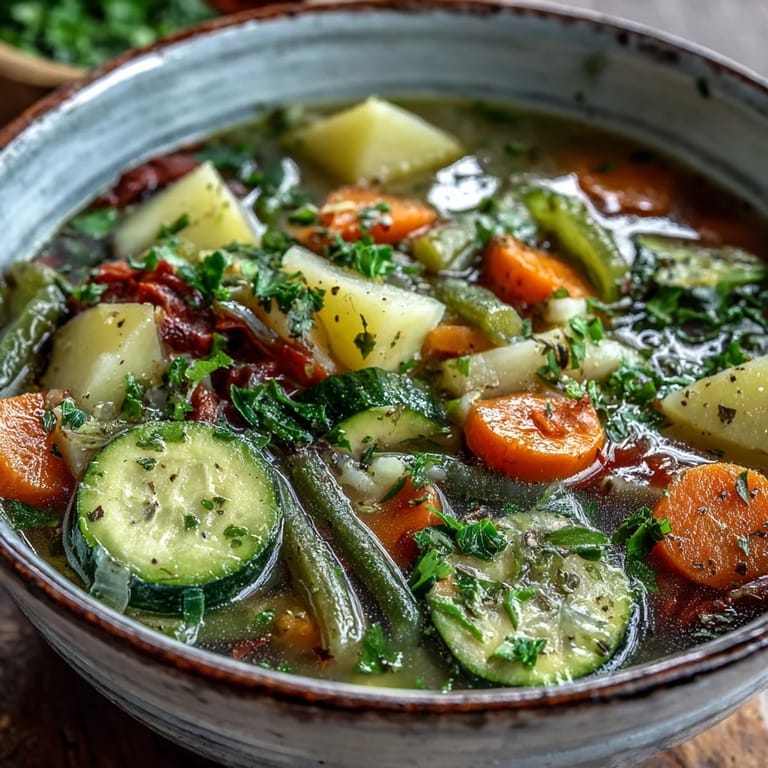
Save There's something magical about a pot of vegetable soup simmering on the stove while rain taps against the kitchen window. My neighbor once stopped by on a chilly afternoon, and I found myself ladling this soup into mismatched bowls without hesitation—the kind of dish that feels generous without requiring fanfare. It's become my go-to when I want something that tastes like care but demands almost no fussing, just honest vegetables and a little time.
I made this soup for my partner during their first week of night shifts, when they'd come home exhausted and wanting something warm but not heavy. Watching them relax after the first spoonful reminded me why simple, wholesome food matters—it's not about complexity, it's about showing up for someone with something nourishing.
Ingredients
- 3 medium potatoes, peeled and diced: These are your soup's backbone, turning creamy as they cook and giving the broth gentle body without added cream.
- 2 medium carrots, peeled and sliced: They add natural sweetness and that satisfying tender-crisp texture if you don't overcook them.
- 2 celery stalks, diced: This builds depth—it's subtle but absolutely essential to the flavor base.
- 1 medium onion, chopped: Don't skip the sauté step; it transforms the onion's sharpness into something mellow and foundational.
- 1 zucchini, diced: Adds moisture and lightness without competing for attention.
- 1 cup green beans, cut into 1-inch pieces: They stay slightly firm, giving textural contrast to the softer vegetables.
- 2 cloves garlic, minced: A minute in hot oil releases its perfume and mellows its bite into warmth.
- 6 cups vegetable stock: Use good stock if you can—it's the foundation of every spoonful, so it's worth choosing one you'd actually drink.
- 1 bay leaf: It whispers in the background, adding complexity you can't quite name.
- 1 teaspoon dried thyme and 1 teaspoon dried parsley: These dried herbs work beautifully here, infusing gradually rather than wilting away.
- ½ teaspoon ground black pepper and 1 teaspoon salt: Season gradually and taste as you go—every stock is different.
- 2 tablespoons olive oil: A good quality oil makes the sauté step feel intentional.
- 1 cup frozen peas: They go in at the end to preserve their bright sweetness and tender snap.
- Fresh parsley for garnish (optional): A small handful brings color and a fresh note that lifts the whole bowl.
Tired of Takeout? 🥡
Get 10 meals you can make faster than delivery arrives. Seriously.
One email. No spam. Unsubscribe anytime.
Instructions
- Build your flavor base:
- Heat olive oil in a large pot over medium heat, then add onion, carrots, and celery. Let them soften for about 5 minutes, stirring occasionally—you're looking for the onion to turn translucent and the celery to lose its raw bite. The kitchen will smell immediately inviting.
- Welcome the garlic:
- Add minced garlic and cook for just 1 minute, stirring constantly so it flavors the oil without browning or turning bitter. That's when you'll notice the aroma shift from vegetal to something deeper.
- Add the heartier vegetables:
- Stir in potatoes, green beans, and zucchini, cooking for 2 minutes while stirring occasionally. This brief time helps them get a light coating of oil before the liquid arrives.
- Pour in the broth:
- Add vegetable stock along with bay leaf, thyme, parsley, salt, and pepper, stirring to combine everything evenly. The pot will look full and loose; that's perfect.
- Simmer gently:
- Bring everything to a boil, then reduce heat and cover. Let it simmer for 20 to 25 minutes—the potatoes should be tender enough to break with a spoon, but not falling apart. Taste the broth at around 20 minutes; it should taste complete and seasoned.
- Finish with brightness:
- Stir in frozen peas and cook for 2 to 3 minutes more, then remove the bay leaf before serving. The peas add color and a gentle sweetness.
- Serve with intention:
- Ladle into bowls and scatter fresh parsley on top if you have it, then serve while the soup is steaming hot.
 Save
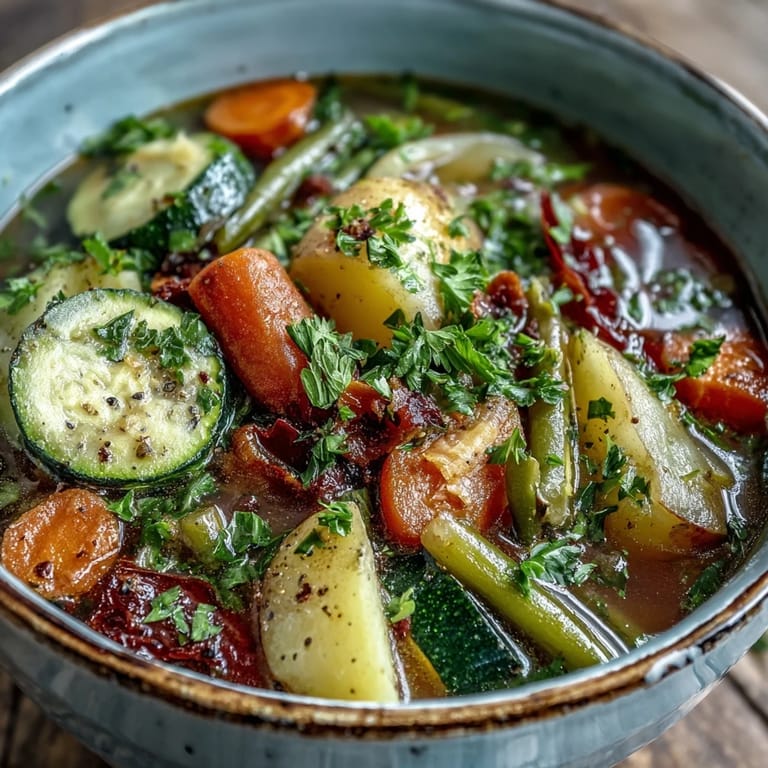
Save My daughter once declared this 'the only soup I'll eat without complaining,' which felt like winning the lottery. Now whenever she's under the weather, she asks for this specific pot, and I realize it's become part of our family's quiet language—comfort that doesn't need explanation.
Seasonal Swaps That Work Beautifully
Summer calls for corn kernels and fresh spinach stirred in at the end, while autumn begs for diced squash and kale. Winter is perfect as written, but springtime loves fresh peas from the pod and tender new potatoes. The beauty of this soup is its flexibility—it adapts to what's at the market and what your mood demands, so you never tire of making it.
When You Want Extra Richness
There's no shame in stirring a splash of cream or a handful of grated Parmesan into your bowl just before eating. I've done this on evenings when the soup needs to feel more substantial, and it transforms without overwhelming the vegetables. For a vegan version, use plant-based stock and skip the dairy entirely—the soup stands proudly on its own.
Serving and Storage Wisdom
This soup tastes even better the next day, when the flavors have melded into something rounder and more cohesive. Ladle it into shallow bowls alongside crusty bread or a simple green salad for a complete, unfussy meal that feels nourishing without being heavy.
- Store leftovers in an airtight container for up to 4 days, or freeze for up to 3 months.
- If reheating from frozen, thaw overnight in the refrigerator, then warm gently on the stove.
- Fresh herbs like parsley or basil added just before serving brighten a reheated bowl.
 Save
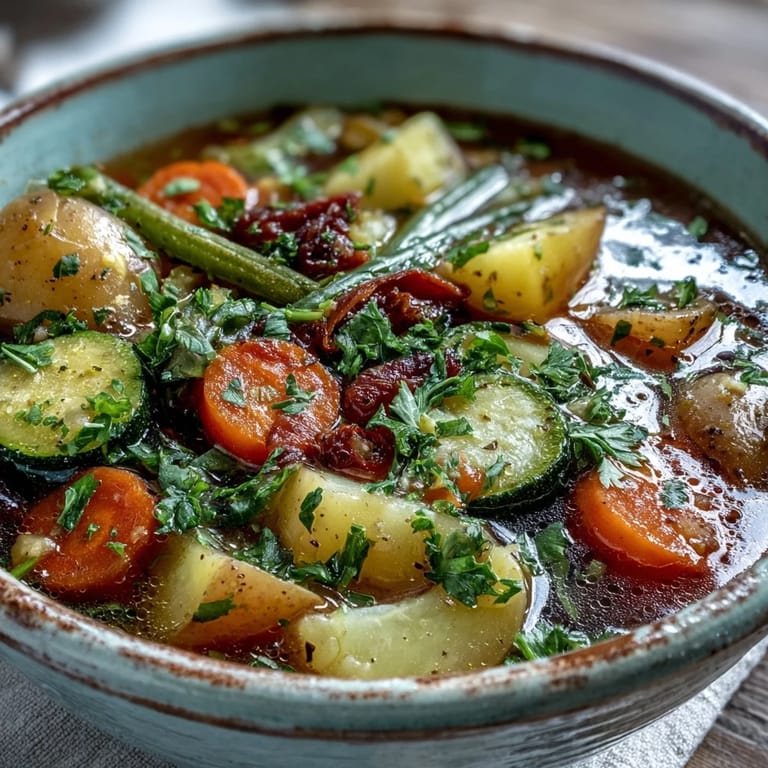
Save This soup has become my quiet victory in the kitchen, proof that the best dishes don't require showing off. Make it when you need something warm, share it when someone needs comfort, and let it remind you that good food is often just good vegetables, a little time, and genuine care.
Recipe FAQs
- → Can I use different vegetables in this soup?
Absolutely! This soup is very versatile. You can swap in seasonal favorites like corn, spinach, kale, butternut squash, or parsnips. Just adjust cooking times based on the vegetables' density to ensure everything is tender.
- → How can I make this soup creamier?
For a richer texture, stir in a splash of heavy cream, half-and-half, or coconut milk just before serving. You can also blend a portion of the soup and stir it back in for natural creaminess, or add grated cheese for extra indulgence.
- → Can I prepare this soup ahead of time?
Yes! This soup stores beautifully in the refrigerator for up to 4 days and actually tastes even better the next day as flavors meld. You can also freeze it for up to 3 months in airtight containers.
- → What type of potatoes work best?
Yukon Gold or russet potatoes are ideal for this soup. Yukon Golds hold their shape well while adding creaminess, while russets break down slightly to naturally thicken the broth. Red potatoes also work if you prefer a firmer texture.
- → How do I prevent the vegetables from becoming mushy?
Add harder vegetables like potatoes and carrots first, then introduce softer ones like zucchini and peas toward the end of cooking. Monitor the simmer closely and avoid overcooking—vegetables should be tender but still hold their shape.
- → Is this soup suitable for meal prep?
Definitely! Portion the soup into individual containers for easy grab-and-go lunches throughout the week. It reheats wonderfully on the stovetop or in the microwave, making it perfect for busy weekdays.