 Save
Save My first bowl of miso soup arrived at a tiny restaurant in Tokyo on a grey morning when I'd been wandering for hours, jet-lagged and uncertain. The server set it down without ceremony, steam rising in delicate wisps, and something about that simple gesture—the care in the placement, the warmth of the bowl against my palms—made me understand why this soup has been a cornerstone of Japanese meals for centuries. It wasn't fancy or complicated, just honest and deeply nourishing in a way that felt like coming home to a place I'd never been.
I made this for my partner on a Tuesday night when they came home exhausted, and watched their shoulders visibly relax after the first spoonful. There's something about miso soup that seems to quiet the mind—the umami-rich broth, the soft yielding tofu, the subtle brininess of seaweed all working together to say, without words, that everything will be okay.
Ingredients
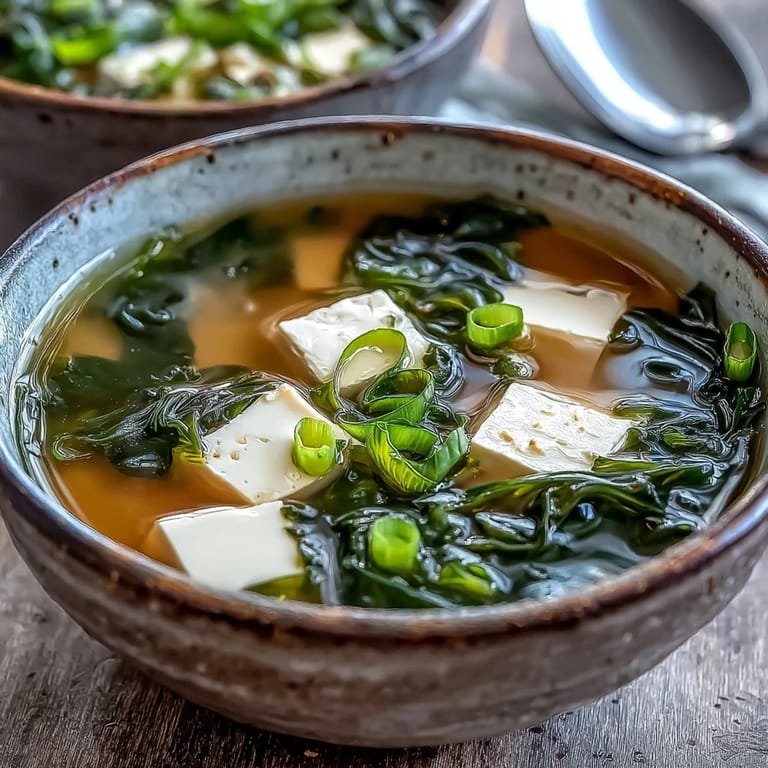
- Dashi stock (4 cups): This is the soul of the soup; vegetarian dashi made from kombu seaweed and shiitake mushrooms works beautifully if you want to keep it plant-based, though traditional bonito-based dashi has an incomparable depth.
- White or yellow miso paste (3 tablespoons): The paste that transforms simple broth into something transcendent; buy it from a proper source if you can, as the quality difference is noticeable.
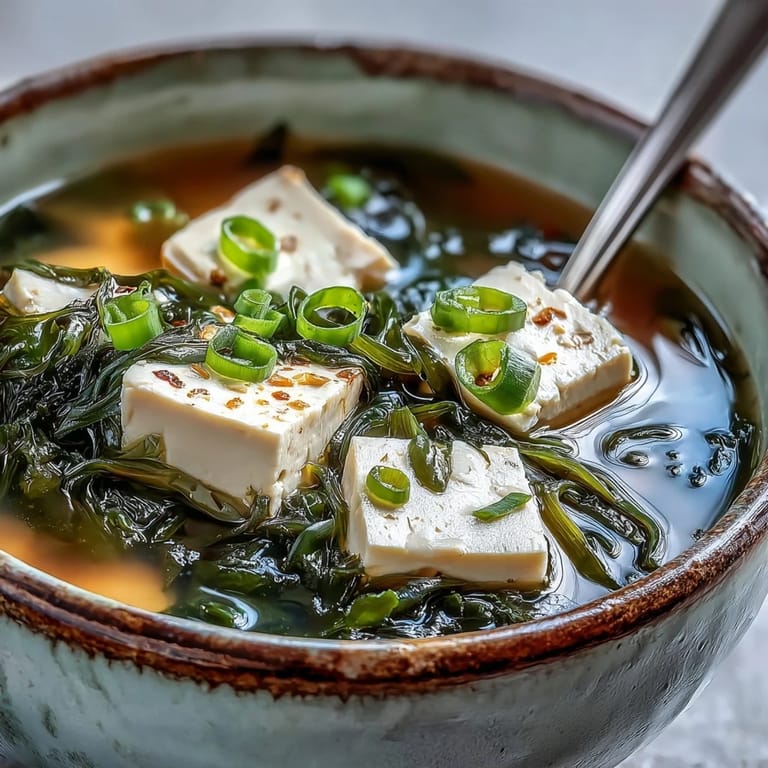
- Silken tofu (200 g): Silken, not firm—the delicate custard-like texture is essential and will break if you're rough with it, so handle gently and cut into half-inch cubes.
- Dried wakame seaweed (2 tablespoons): It seems like nothing until it hits water and suddenly unfurls into tender ribbons full of mineral flavor.
- Scallions (2 whole): The fresh green notes at the end brighten everything and add a slight sharpness that contrasts beautifully with the soup's savory warmth.
Tired of Takeout? 🥡
Get 10 meals you can make faster than delivery arrives. Seriously.
One email. No spam. Unsubscribe anytime.
Instructions
- Start with gentle heat:
- Pour your dashi into a medium saucepan and turn the heat to medium, letting it warm slowly until you see small bubbles forming around the edges. Don't rush this—a gentle simmer is all you need.
- Rehydrate the seaweed:
- While the broth warms, place the dried wakame in a small bowl of cold water and let it sit for about five minutes until it softens and expands. Drain it well before adding to the soup.
- Prepare the miso bridge:
- This is the trick that changed everything for me: scoop out a ladle of hot dashi into a small bowl with your miso paste and whisk it together until completely smooth and dissolved. This prevents lumps and keeps the miso paste integrated, rather than floating in clumps.
- Bring everything together gently:
- Add the tofu cubes and drained wakame to the simmering dashi and let them warm for two to three minutes, moving carefully so the tofu stays intact. Then remove the pan from heat entirely before stirring in your dissolved miso paste.
- Finish and serve:
- The key is never to boil the miso after it's added—boiling destroys the probiotics and flattens the flavor, so keep it off the heat once the paste goes in. Ladle into bowls, scatter the fresh scallions on top, and serve right away while the steam is still rising.
 Save
Save There was a moment when my young niece tried miso soup for the first time at my kitchen counter and declared it tasted like the ocean, but in a good way. That's when I realized this soup isn't just sustenance—it's a small introduction to umami, to Japanese culinary philosophy, to the idea that food doesn't need to be complicated to be profound.
The Miso Paste Selection Matters
Not all miso pastes are created equal, and I learned this by trial and error over several batches. White or yellow miso is milder and slightly sweet, which is why it's traditionally used for miso soup, but I've experimented with blending a tablespoon of white miso with a tablespoon of red miso for added depth and complexity. Red miso is earthier and more fermented, and the combination gives you layers of flavor that simple white miso alone can't achieve. Once you find a miso you love—and I recommend buying it from a Japanese market or reputable online source—stick with it, because quality makes a tangible difference in your finished bowl.
Building Your Dashi at Home
You can absolutely buy pre-made dashi, and there's no shame in it, but making your own opens up creative possibilities. I discovered that a simple vegetarian dashi using a four-inch piece of kombu seaweed and a handful of dried shiitake mushrooms steeped in four cups of water for ten minutes creates a broth that's just as satisfying as the traditional bonito-based version. Bring the water to a simmer, add the kombu and mushrooms, let it steep, strain, and you have a golden, mineral-rich base that's been alive with umami the whole time. It's worth the extra ten minutes if you have it.
Variations and Personal Touches
The beauty of miso soup is its flexibility, and once you master the basic formula you can make it your own. I've added thin slices of mushrooms, fresh spinach, a few cubes of daikon radish, and even delicate strips of nori seaweed depending on what was in my kitchen and what mood I was in. The soup adapts gracefully to seasonal vegetables and your pantry, which is part of why it's remained a staple for centuries. Some nights I add a soft poached egg for extra richness, other times I keep it minimal and let the miso and tofu shine.
- Mushroom lovers should try adding shiitake or enoki slices about three minutes before the soup is done.
- For a protein boost without changing the flavor profile, a soft poached or beaten egg stirred in right before serving adds luxurious richness.
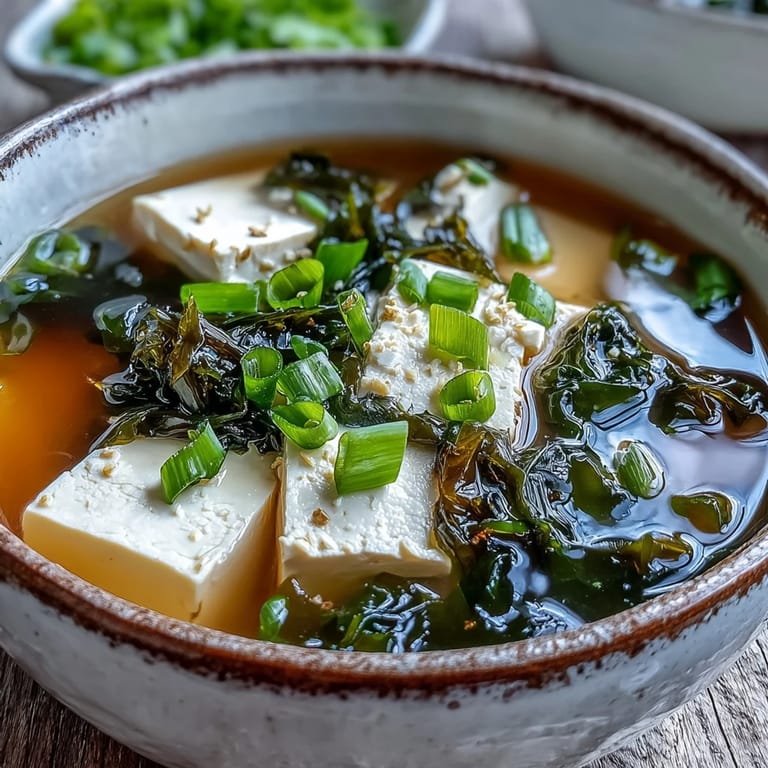
- A small drizzle of sesame oil or a sprinkle of toasted sesame seeds on top transforms the presentation and adds a toasty note.
 Save
Save This soup has become my go-to when I need comfort without fuss, a bowl of quiet simplicity that reminds me that the best meals often ask for very little, yet give so much. Make it often, make it your own, and let it become part of your kitchen rhythm.
Recipe FAQs
- → What is miso paste made from?
Miso is a fermented paste created from soybeans, salt, and koji (rice mold starter). White miso offers a milder, sweeter flavor, while red miso provides deeper, more intense umami. Fermentation time determines color and taste intensity.
- → Can I use vegetable stock instead of dashi?
Traditional dashi provides authentic Japanese flavor, but quality vegetable broth works for plant-based versions. Look for kombu (kelp) and shiitake-based stocks to maintain that characteristic oceanic umami note essential to this dish.
- → Why shouldn't miso be boiled?
High heat destroys beneficial live cultures in miso and can create a bitter, overly salty taste. Always dissolve miso in warm liquid off the heat, stirring gently until fully incorporated into your broth.
- → Is silken tofu different from regular tofu?
Silken tofu contains more water and isn't pressed like firm varieties, creating delicate cubes that almost melt in your mouth. Its creamy texture pairs perfectly with light broths and requires minimal cooking time.
- → How long does wakame need to soak?
Dried wakame rehydrates quickly in just 5 minutes of cold water. It expands significantly, so a small amount yields plenty. Rinse after soaking to remove any sand or salt before adding to your soup.