 Save
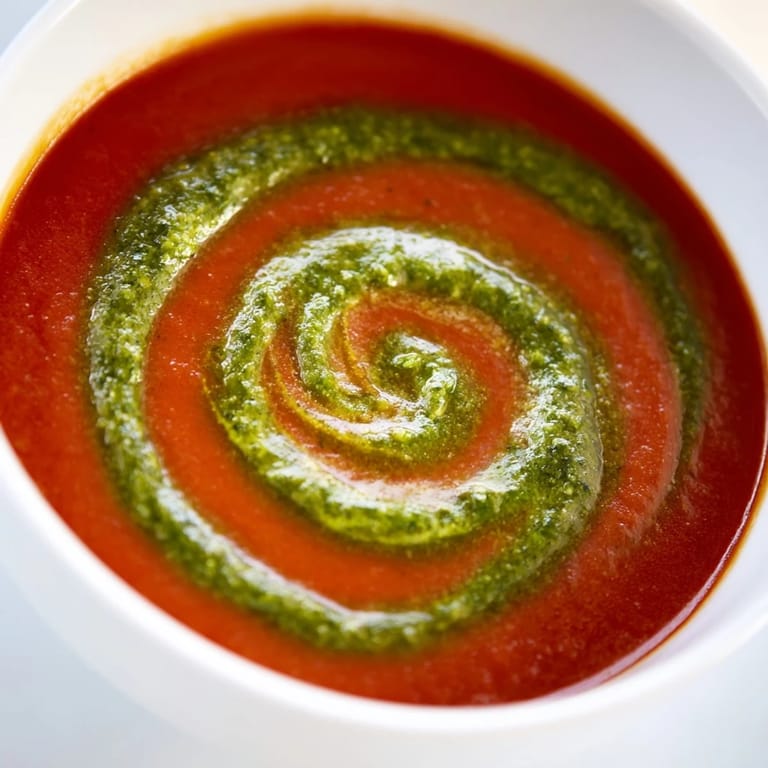
Save My kitchen smelled like a sunlit garden in Italy, though I was standing in my cramped apartment on a rainy Tuesday. The basil pesto I'd just whirred together clung to the spoon, bright green and almost too pretty to stir into anything. I ladled the tomato soup into mismatched bowls, drizzled the pesto on top, and watched it swirl into ribbons. That first spoonful made me forget about the weather entirely.
I made this for my sister when she came over feeling defeated after a long week. She sat at my counter, quiet and tired, and I set the bowl in front of her without much ceremony. Halfway through, she looked up and said it tasted like being taken care of. I've made it for her six times since then, and it always means the same thing.
Ingredients
- Olive oil: Use a good one for sauteing because it builds the base flavor, but save your fancy extra virgin for the pesto where it really shines.
- Onion: Finely chopped onion melts into sweetness and disappears into the soup, so don't rush this step or you'll taste the sharpness later.
- Garlic cloves: Fresh garlic adds warmth without overpowering, and that one-minute sauté makes all the difference between raw bite and mellow fragrance.
- Ripe tomatoes: Use the ripest tomatoes you can find in summer, or reach for canned whole peeled tomatoes in winter because they're picked at peak flavor.
- Tomato paste: This deepens the tomato flavor and adds body, so don't skip it even though it seems small.
- Vegetable broth: Homemade is lovely, but a good-quality store-bought broth works perfectly and no one will know the difference.
- Sugar: Just a teaspoon balances the acidity of the tomatoes and rounds out the flavor without making it taste sweet.
- Heavy cream: Stirred in at the end, it turns the soup velvety and rich, clinging to your spoon in the most satisfying way.
- Fresh basil leaves: The star of the pesto, so use the freshest you can find because wilted basil tastes more like sadness than summer.
- Pine nuts: They blend into a creamy, slightly sweet base for the pesto, though walnuts work if you want a more earthy flavor.
- Parmesan cheese: Adds salty, nutty depth to the pesto and helps it cling to the soup instead of just pooling on top.
- Extra virgin olive oil: The backbone of the pesto, so use something you'd happily dip bread into because you'll taste it in every swirl.
Tired of Takeout? 🥡
Get 10 meals you can make faster than delivery arrives. Seriously.
One email. No spam. Unsubscribe anytime.
Instructions
- Start with the aromatics:
- Heat the olive oil in your largest pot over medium heat, then add the chopped onion and let it soften for about five minutes, stirring occasionally until it turns translucent and smells sweet. Toss in the minced garlic and cook for just one minute, stirring constantly so it doesn't burn and turn bitter.
- Build the tomato base:
- Add the chopped tomatoes and tomato paste, stirring everything together and letting it cook for five minutes so the tomatoes start to break down and the paste darkens slightly. Pour in the vegetable broth, then add the sugar, salt, and pepper, bringing everything to a gentle boil before turning the heat down to a simmer.
- Simmer and deepen:
- Let the soup bubble away uncovered for twenty minutes, stirring occasionally and watching the tomatoes collapse into the broth. The kitchen will smell incredible, and the soup will thicken just enough to coat the back of a spoon.
- Make the pesto:
- While the soup simmers, toss the basil, pine nuts, garlic, and Parmesan into your food processor and pulse until everything is finely chopped and almost paste-like. With the motor running, drizzle in the olive oil in a slow stream until the pesto becomes smooth and glossy, then taste and add a pinch of salt if needed.
- Blend until silky:
- Once the soup has simmered, use an immersion blender right in the pot to puree everything until completely smooth, or carefully transfer it in batches to a countertop blender. Blend until there are no chunks left and the soup looks velvety and uniform.
- Finish with cream:
- Stir in the heavy cream and taste the soup, adjusting the salt and pepper if it needs it. Warm it through gently for a minute or two, but don't let it boil or the cream might separate.
- Serve with style:
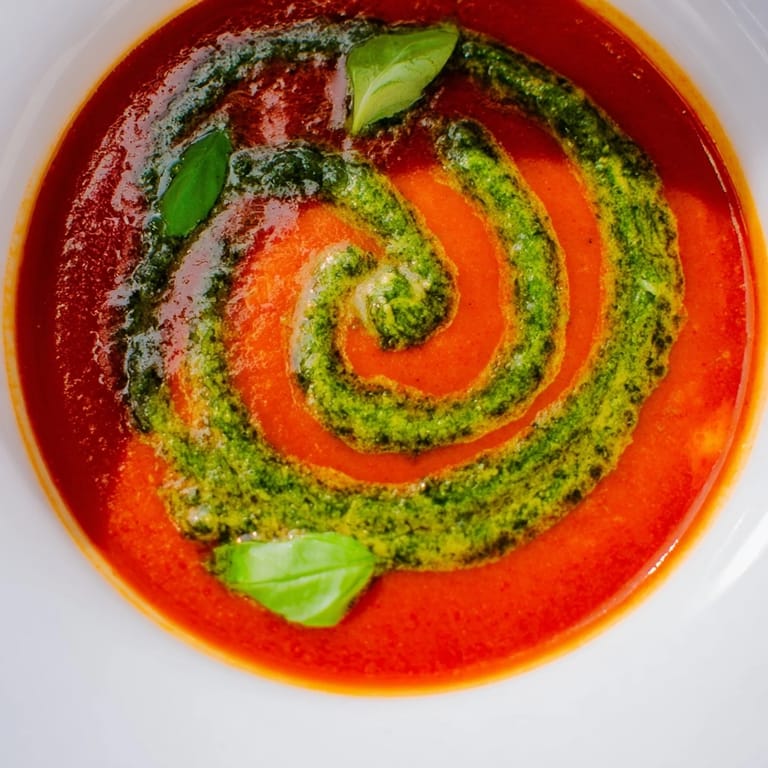
- Ladle the hot soup into bowls and drizzle a generous spoonful of pesto on top of each serving, using the back of the spoon to swirl it into a pretty pattern. Serve immediately while the soup is hot and the pesto is vibrant.
 Save
Save One evening I made this soup and forgot to buy cream, so I used a splash of coconut milk instead. It tasted different, lighter and faintly tropical, but my friend who's dairy-free nearly cried with happiness. Sometimes the best versions of a recipe come from necessity, and now I keep a can of coconut milk in the pantry just in case.
Storing and Reheating
The soup keeps beautifully in the fridge for up to four days in an airtight container, and it actually tastes better the next day when the flavors have had time to meld. Reheat it gently on the stove over low heat, stirring occasionally, and add a splash of broth or water if it's thickened too much. The pesto is best fresh, but you can store it separately in a small jar with a thin layer of olive oil on top to keep it bright green for up to three days.
Serving Suggestions
This soup begs to be served with something crusty and golden to dip into it. I usually make grilled cheese sandwiches on the side, buttery and crisp, or toast thick slices of sourdough and rub them with garlic. Sometimes I'll scatter extra basil leaves on top or add a pinch of chili flakes for anyone who wants a little heat. It's the kind of meal that feels like a hug, especially with good bread and someone you love sitting across from you.
Make It Your Own
Once you've made this a few times, it becomes a template for whatever you have on hand. Swap the pine nuts for walnuts or cashews if that's what's in your pantry, or stir in a handful of spinach during the last few minutes of simmering for extra greens. I've made the pesto with arugula when my basil plant died, and it tasted peppery and wild in the best way.
- Roast the tomatoes with garlic before adding them to the pot for a deeper, smokier flavor.
- Add a splash of balsamic vinegar at the end for a subtle tang that makes the tomatoes sing.
- Top with crispy croutons or a handful of toasted pine nuts for crunch.
 Save
Save This soup has become my answer to grey days, bad news, and empty fridges that still have a few tomatoes rolling around. It's proof that comfort doesn't have to be complicated, just honest and warm.
Recipe FAQs
- → Can I use canned tomatoes instead of fresh ones?
Absolutely. Two cans (800g) of whole peeled tomatoes work perfectly and deliver consistent flavor year-round. Drain excess liquid if needed and proceed with the same cooking method.
- → How do I make this soup vegan?
Replace heavy cream with coconut cream or cashew cream for the same luxurious texture. In the pesto, use nutritional yeast or a vegan Parmesan alternative. The rest of the ingredients are naturally plant-based.
- → What's the best way to blend the soup smoothly?
An immersion blender is quickest and easiest—submerge it directly in the pot for a few minutes. For a countertop blender, cool the soup slightly, blend in batches (never fill more than halfway), then return to the pot.
- → Can I make the pesto ahead of time?
Yes. Prepare pesto up to 2 days ahead and store in an airtight container in the refrigerator. A thin layer of olive oil on top helps preserve the vibrant green color and prevents oxidation.
- → What can I substitute for pine nuts?
Walnuts, cashews, or even sunflower seeds work beautifully. They add similar texture and richness with slightly different flavor profiles. Toast them lightly before blending for extra depth.
- → How should I store leftover soup?
Store soup and pesto separately in airtight containers for up to 4 days in the refrigerator. Freeze soup for up to 3 months (keep pesto separate as it stores less well frozen). Reheat gently on the stovetop, stirring occasionally.