 Save
Save I discovered this bowl during a humid afternoon when my kitchen felt too warm for cooking anything elaborate. A friend had just dropped off fresh cilantro from her garden, and I had coconut milk leftover from a failed curry attempt the week before. Rather than let ingredients languish, I decided to build something bright and cold around them, something that tasted like a Thai market but required minimal heat and effort. That first bite—the creamy quinoa meeting the snap of fresh vegetables and that silky peanut sauce—changed how I thought about weeknight eating.
I made this for a potluck where someone announced they'd gone vegan, and instead of panicking, I simply swapped honey for maple syrup and watched people actually go back for seconds. That's when I realized this bowl doesn't feel like a compromise or a restriction—it tastes genuinely celebratory, like you chose it because you wanted to, not because you had to.
Ingredients
- Quinoa, rinsed: The rinse matters more than you'd think because it removes the bitter coating and lets the grain's natural nuttiness shine through, especially when it's cooked in coconut milk.
- Coconut milk, full-fat or light: Full-fat gives you silkier, more luxurious grains, but light works if you prefer something less heavy—just know the texture difference is real.
- Water: This balances the richness of the coconut so the bowl doesn't feel overwhelming or one-note.
- Salt: A pinch goes in the cooking liquid, not just at the end, so every grain is seasoned evenly from the inside out.
- Red bell pepper, thinly sliced: Thin slices mean they stay crisp longer and deliver more sweetness in each bite than chunks would.
- Carrot, julienned or shredded: Julienne gives you elegance and texture; shredded is faster and just as delicious, so choose based on your mood and clock.
- Cucumber, thinly sliced: Add this last if you're eating right away, otherwise it can weep and make the bowl soggy—a lesson I learned the hard way.
- Purple cabbage, shredded: It holds its color and crunch better than green cabbage and adds a subtle earthiness that grounds the sweetness of the dressing.
- Edamame, cooked and shelled: They add protein and a buttery texture that makes this feel like a complete meal rather than just a side.
- Fresh cilantro, chopped: Don't skip this; it's not garnish, it's flavor, and it ties the whole bowl together with a brightness that makes you taste every other ingredient more vividly.
- Sesame seeds: Toasted ones deliver more flavor than raw, and they add a subtle nuttiness that echoes the peanut sauce.
- Creamy peanut butter: Natural or conventional works, but make sure it's creamy—chunky will ruin the dressing's silky texture.
- Soy sauce: Use low-sodium if you prefer, and go gluten-free if that matters to you; the flavor difference is negligible but the peace of mind is everything.
- Rice vinegar: It's milder and sweeter than distilled vinegar, which is why this dressing tastes rounded rather than sharp.
- Lime juice, fresh: Bottled works in a pinch, but fresh lime brightens everything immediately and reminds you why you're making this instead of ordering takeout.
- Maple syrup or honey: Maple syrup keeps it vegan, honey is slightly richer—both balance the spice and saltiness beautifully.
- Toasted sesame oil: A small amount goes a long way, and it should smell nutty and complex; stale sesame oil is worse than no sesame oil.
- Warm water: Added gradually to the dressing, it prevents lumps and gives you control over the consistency you actually want.
Tired of Takeout? 🥡
Get 10 meals you can make faster than delivery arrives. Seriously.
One email. No spam. Unsubscribe anytime.
Instructions
- Rinse and ready the quinoa:
- Give your quinoa a good rinse under cold water using a fine-mesh strainer, rubbing it gently between your fingers so you actually feel the water run clear. This removes the saponins that make it taste bitter and takes about thirty seconds but makes an enormous difference.
- Cook the grains in coconut milk:
- Bring your quinoa, coconut milk, water, and salt to a boil in a medium saucepan, then drop the heat down low and cover it tightly. Simmer for 15 minutes without peeking—the steam needs to stay trapped—then remove from heat and let it sit covered for another 5 minutes before fluffing gently with a fork.
- Prep vegetables while everything cooks:
- While the grains are simmering, slice your bell pepper into thin, even pieces, julienne or shred your carrot, slice your cucumber, and shred your cabbage. If your edamame aren't already cooked, get them going now so everything is ready at the same time.
- Whisk together the dressing:
- In a small bowl, combine your peanut butter, soy sauce, rice vinegar, lime juice, maple syrup, and sesame oil, whisking until everything is roughly combined. Start adding warm water one tablespoon at a time, whisking between each addition, until you have a pourable consistency that coats the back of a spoon but still flows freely.
- Build your bowls:
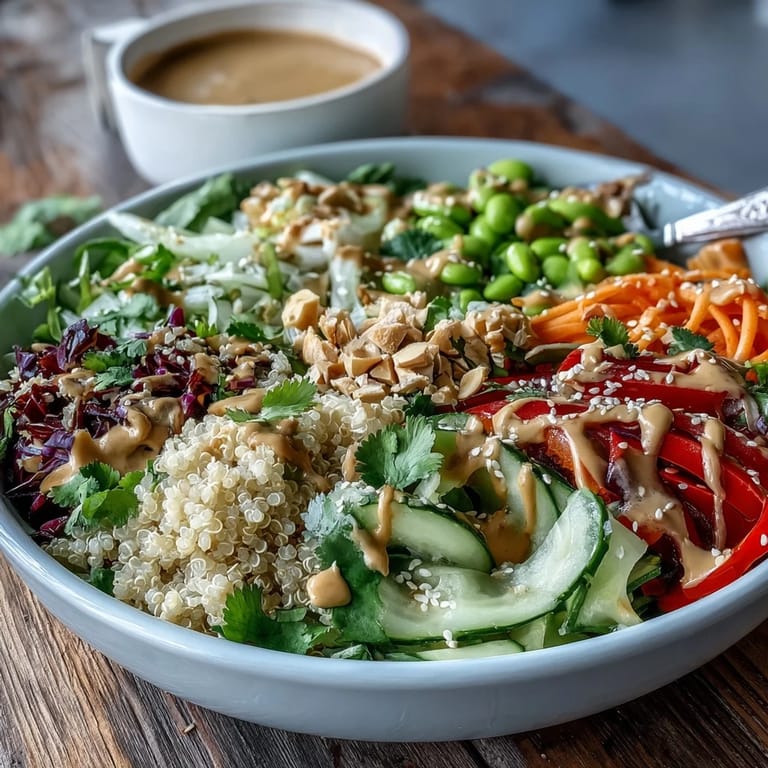
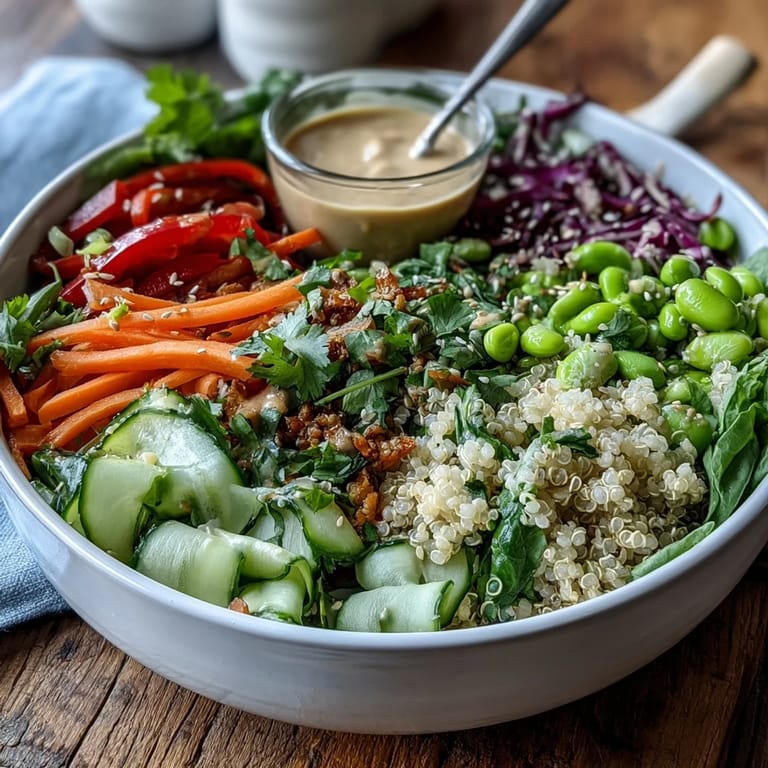
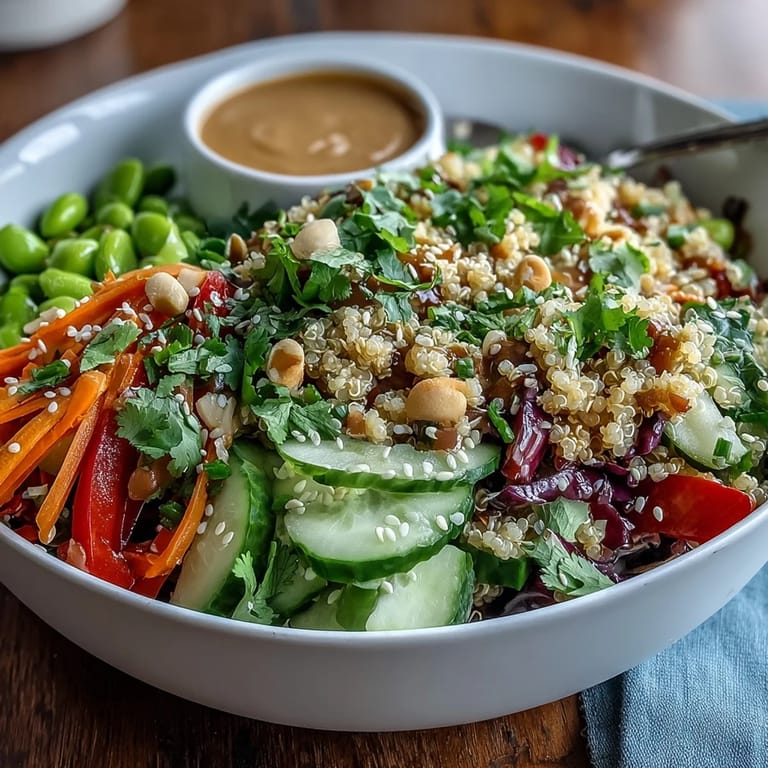
- Divide the fluffy quinoa evenly among four bowls, then arrange your vegetables and edamame on top in whatever pattern makes you happy. Drizzle generously with the peanut dressing so every spoonful gets some, then garnish with cilantro and sesame seeds and serve immediately.
- Chill for later if you prefer:
- If you're making this ahead, store the dressing separately so the vegetables stay crisp, and only combine everything right before eating. A cold version is equally delicious on a hot day, tasting refreshing rather than comforting.
 Save
Save My teenager, who claims to hate vegetables with the passion of someone who's never had them prepared well, asked for seconds and then asked if we could make this again the next night. That moment—when someone stops fighting the food and starts actually enjoying it—is when a recipe stops being just instructions and becomes something that matters.
Why The Coconut Matters
Cooking quinoa in coconut milk instead of water transforms it from a neutral grain into something creamy and luxurious, almost dessert-like in its richness, but the vegetables and peanut sauce keep it balanced and savory. The coconut doesn't announce itself loudly; instead it whispers underneath, making every other flavor taste more like itself. It's the difference between a grain bowl that feels healthy and one that feels like an actual choice.
The Dressing Is Everything
I spent years thinking peanut sauce was complicated, but this version taught me that it's really just five or six ingredients in the right proportions, whisked together until smooth. The lime juice and rice vinegar brighten it so it doesn't sit heavy on your tongue, the maple syrup rounds out the edges, and the sesame oil adds a depth that makes people ask what makes it taste so good. If your dressing seems too thick, add warm water—not cold water, warm—because cold will make the peanut butter seize up and fight you.
Customizing Without Losing Yourself
This bowl is forgiving in the best way, which means you can swap vegetables based on what's in season or what you actually like rather than what the recipe says. Roasted broccoli is excellent, julienned zucchini works beautifully, shredded Brussels sprouts add a peppery note—whatever you choose will be delicious as long as you honor the ratio of grains to vegetables to dressing. The template matters more than the specific vegetables, so treat this as a starting point rather than a rule.
- Add grilled tofu or tempeh if you want extra protein and a slightly smoky edge.
- Sprinkle with roasted peanuts or cashews for additional crunch that transforms the texture entirely.
- Make it cold by chilling everything separately and assembling just before eating, which makes it perfect for meal prep or hot days.
 Save
Save This bowl has become my answer to the question of what to cook when I want something that feels both nourishing and exciting, something that doesn't require a recipe blog scroll or complicated techniques. It's the kind of food that makes you feel good while you're eating it and better after, which is really all any of us are looking for.
Recipe FAQs
- → Can I make this bowl ahead of time?
Yes! Prepare the quinoa and vegetables in advance, storing them separately in airtight containers. The peanut dressing keeps well in the refrigerator for up to a week. Assemble bowls just before serving to maintain the vegetables' crisp texture.
- → What protein alternatives work well?
Grilled tofu, tempeh, or baked chicken thighs make excellent additions. For extra plant protein, double the edamame or add roasted chickpeas. Shrimp also pairs beautifully with the Thai flavors.
- → Is this bowl spicy?
The original recipe is not spicy. If you enjoy heat, add sliced Thai chilies, sriracha, or red pepper flakes to the peanut dressing. Fresh ginger or a dash of chili garlic sauce also adds warmth.
- → Can I use other grains?
Brown rice, farro, or cauliflower rice work well as substitutes. Adjust cooking liquid and time accordingly. For a grain-free version, use cauliflower rice and reduce simmering time to 5-7 minutes.
- → How do I store leftovers?
Store components separately in the refrigerator for 3-4 days. Keep the dressing in a sealed jar. When reheating quinoa, add a splash of water or coconut milk to restore creaminess. Raw vegetables are best enjoyed fresh but can be stored for 2 days.
- → Is this dish nut-free?
As written, it contains peanuts. For a nut-free version, substitute sunflower seed butter or tahini in the dressing. Omit sesame seeds and replace with pumpkin seeds or hemp hearts for crunch.