 Save
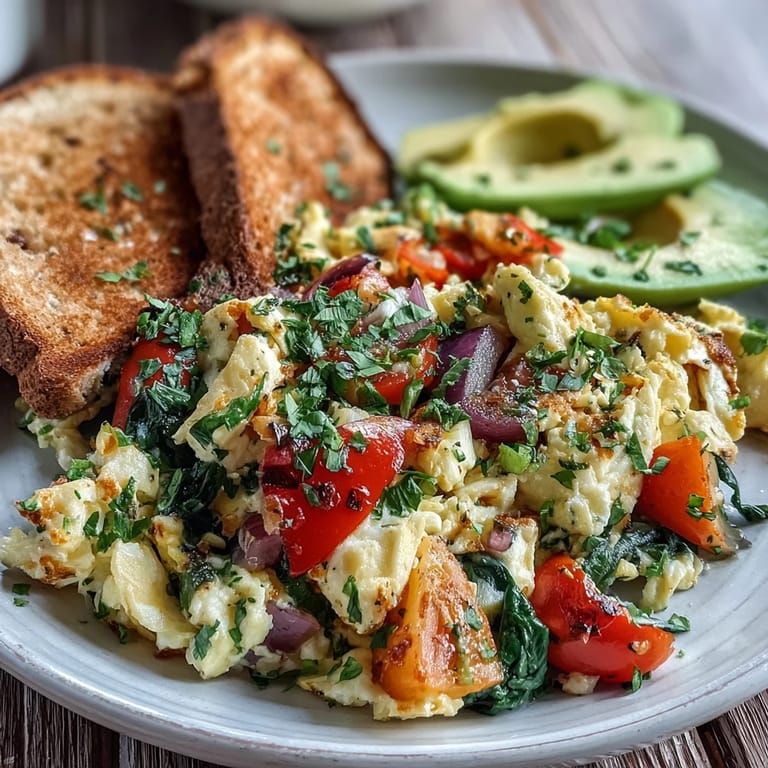
Save There's something about a scrambled egg that can either disappoint or delight depending on how you treat it. I discovered this years ago when a friend casually mentioned she adds a splash of milk and barely whispers the spatula across the pan, letting the eggs stay creamy rather than rubbery. That same morning, she loaded her skillet with whatever vegetables were about to wilt in her fridge—and suddenly breakfast felt intentional, colorful, and alive. Now I can't imagine making scrambled eggs any other way.
I made this for my sister on a Sunday morning when she was going through one of those phases where she'd convinced herself she wasn't a breakfast person. She watched skeptically as I whisked the eggs, then listened to the soft sizzle of vegetables hitting the pan. By the time I finished, she was hovering over the skillet asking for the recipe. She's made it at least twice a week since then.
Ingredients
- Eggs: Four large eggs are the foundation, and their quality matters more than you'd think—farm fresh tastes noticeably richer and creates a more luxurious scramble.
- Milk: Just two tablespoons transforms the texture into something genuinely fluffy rather than dense, though oat or almond milk works equally well.
- Salt and black pepper: Season generously before cooking so the flavor builds throughout rather than sitting on the surface.
- Cherry tomatoes: Halved so they release their sweetness and collapse slightly into the eggs instead of staying firm.
- Baby spinach: Wilts in seconds, so add it late to preserve its bright color and tender texture.
- Red bell pepper: Diced small enough to distribute throughout without overpowering any single bite.
- Zucchini: A neutral vegetable that adds moisture and substance without competing with other flavors.
- Red onion: Finely chopped and cooked first so it softens and sweetens rather than staying sharp and raw.
- Olive oil or unsalted butter: Olive oil keeps things light and adds character, while butter creates a richer, more luxurious finish.
- Fresh herbs: A last-minute flourish that tastes more alive than dried herbs ever could.
Tired of Takeout? 🥡
Get 10 meals you can make faster than delivery arrives. Seriously.
One email. No spam. Unsubscribe anytime.
Instructions
- Whisk your eggs with intention:
- Combine the eggs, milk, salt, and pepper in a bowl and whisk until you see tiny bubbles forming and the mixture turns slightly pale. This incorporates air, which is what creates that tender, fluffy quality everyone chases.
- Get your pan hot and ready:
- Medium heat is your friend here—too hot and everything burns before the eggs set, too low and you'll end up with a rubbery scramble. Let the oil or butter shimmer and coat the pan evenly before adding anything.
- Sauté the sturdy vegetables first:
- Add the red onion and bell pepper and let them soften for about two minutes, stirring occasionally. You want them tender enough to bite easily but still slightly textured, not mushy.
- Build flavor with more vegetables:
- Toss in the zucchini and cherry tomatoes and cook for another couple of minutes, letting the tomatoes start to collapse and release their juice. This is where the pan gets fragrant and everything starts tasting intentional.
- Wilt the spinach quickly:
- Stir in the baby spinach and watch it transform from a handful of leaves to something creamy and integrated in less than a minute. Don't walk away—this happens fast.
- Pour in the beaten eggs and be patient:
- Let them sit undisturbed for about thirty seconds so they start to set around the edges, then begin gently pushing them toward the center with your spatula. Think of it as coaxing rather than stirring aggressively.
- Cook until soft and creamy:
- Keep stirring occasionally for another two to three minutes, removing the pan from heat the moment the eggs still look slightly wet on top. They'll continue cooking from residual heat and stay fluffy rather than turning firm and rubbery.
- Finish with fresh herbs and serve immediately:
- Sprinkle with whatever herbs you've chopped and get it to the table while everything is still warm and the eggs are at their most delicate.
 Save
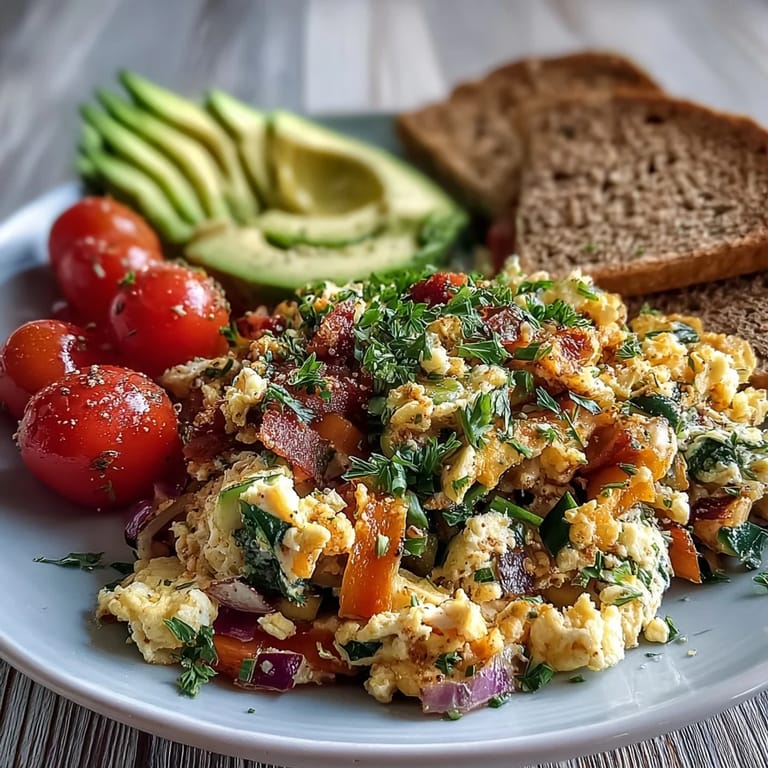
Save Years ago, my neighbor made this for me after I'd helped her move, and I remember being surprised at how something so simple could feel so thoughtful. Since then, I've learned that the best breakfasts are often the ones where someone's taken an extra minute to make vegetables matter, to acknowledge that mornings deserve more than cereal and obligation.
Timing and Temperature
Medium heat is where all the magic happens with scrambled eggs, and it's worth resisting the urge to turn it up when you're hungry and impatient. I learned this the hard way one morning when I cranked the heat, hoping to speed things along and ended up with eggs that looked like rubber and tasted bitter from the pan. Now I set a timer or just accept that good breakfast takes a few minutes, and those few minutes matter.
Vegetable Swaps and Seasonality
This dish transforms with the seasons if you pay attention to what's actually good at the farmer's market. In spring I use fresh peas and tender asparagus, summer calls for corn and heirloom tomatoes, fall invites mushrooms and kale, and winter is all about caramelized onions and roasted peppers. The technique stays exactly the same, but letting the vegetables guide you keeps breakfast from ever feeling repetitive, even if you make it three times a week.
Elevating and Adapting
The beauty of this scramble is that it's a foundation rather than a finished formula, so you can push it in any direction depending on your mood or what needs using up. Some mornings I add crumbled feta and call it Mediterranean, other times I'll throw in avocado slices at the end or serve it on toast to make it more substantial. Keep these quick thoughts in mind when you're experimenting:
- Crumbled feta or goat cheese melts into the warm eggs and tastes more elegant than you'd expect.
- A handful of fresh herbs like dill, tarragon, or cilantro changes the entire personality of the dish without changing anything else.
- Cooking your vegetables in stages means everything finishes at the same time instead of some pieces being overcooked while others stay raw.
 Save
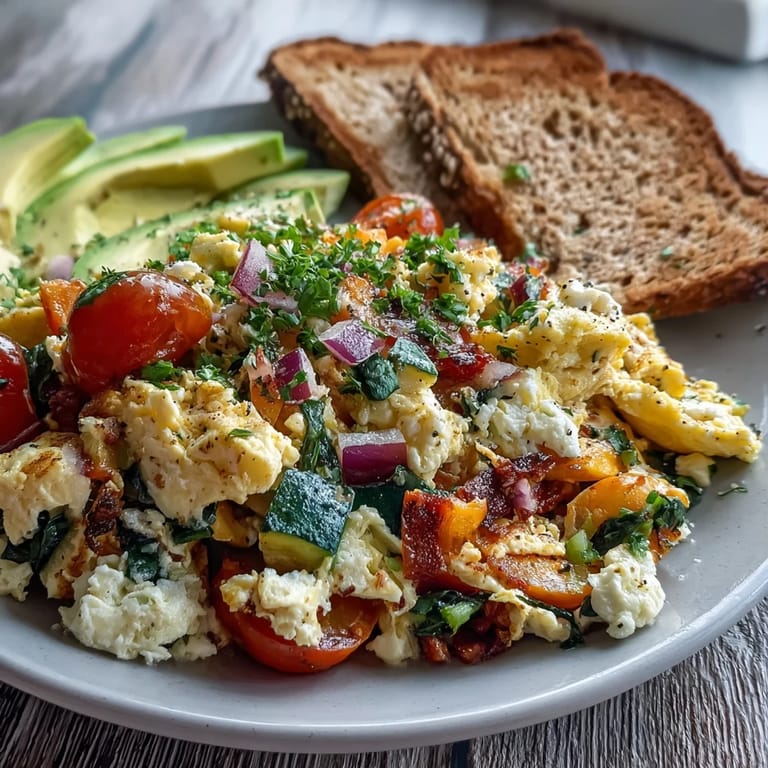
Save This is the kind of breakfast that asks very little but gives back generously in the form of how you feel for the rest of the morning. Make it for yourself on a quiet morning or for someone you care about, and let the simplicity be the point.
Recipe FAQs
- → What vegetables work best in this dish?
Cherry tomatoes, baby spinach, red bell pepper, zucchini, and red onion create a colorful mix. Feel free to swap in seasonal options like asparagus, mushrooms, kale, or diced broccoli depending on what's fresh and available.
- → How do I keep the eggs fluffy?
Whisk the eggs with milk until slightly frothy, then cook over medium heat while gently pushing the edges toward the center. Remove from heat while still slightly soft since residual heat completes the cooking.
- → Can I make this dairy-free?
Absolutely. Use almond milk, oat milk, or coconut milk instead of dairy milk, and cook with olive oil or plant-based butter rather than regular butter. Skip any cheese additions to keep it completely dairy-free.
- → What can I serve alongside?
Whole grain toast, avocado slices, or roasted potatoes make excellent sides. Fresh fruit adds sweetness, while a simple green salad with vinaigrette balances the richness of the eggs.
- → How long will leftovers keep?
Store cooled portions in an airtight container in the refrigerator for up to 2 days. Reheat gently in the microwave or warm in a skillet with a splash of milk to restore creaminess.
- → Can I add cheese?
Crumbled feta, goat cheese, or shredded cheddar make delicious additions. Sprinkle cheese on top during the final minute of cooking so it melts slightly without becoming rubbery.